Growth Factors
TB-500
Thymosin Beta-4 Fragment (LKKTETQ motif)
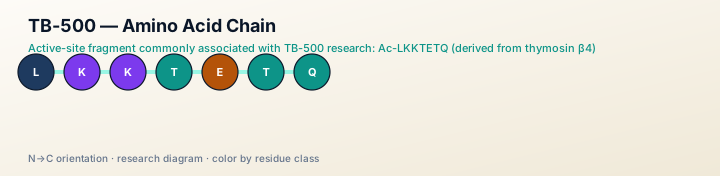
Scientific Overview
TB-500 refers to a research fragment centered on the actin-binding motif of thymosin β4 (Tβ4). Full-length Tβ4 is a 43–amino-acid peptide that sequesters G-actin and participates in cell migration and tissue remodeling pathways.
Mechanism focus: Thymosin β4 regulates actin polymerization, cell motility, and regenerative signaling. The LKKTETQ motif is a key actin-binding region studied for wound and soft-tissue repair biology.
Research Use Cases
- Actin dynamics and cell-migration assays
- Wound-healing and dermal repair models
- Cardiac and neurological injury research using Tβ4 biology
- Comparative studies of Tβ4 fragments versus full-length peptide
Use-Case Study Notations
- Case-study notation: regenerative reviews summarize Tβ4 activity across dermal, ocular, and cardiac injury models, emphasizing actin-mediated cell migration.
- Case-study notation: neurological injury literature explores Tβ4 as a restorative peptide candidate in stroke and neurodegeneration models.
- Commercial “TB-500” preparations should be analytically distinguished from full-length thymosin β4.
Selected Studies (English, PubMed)
Five peer-reviewed sources indexed on PubMed. Links open the PubMed record for verification.
- Thymosin β4: a multi-functional regenerative peptide. Basic properties and clinical applications — PubMed 22074294
- Thymosin β4 as a restorative/regenerative therapy for neurological injury and neurodegenerative diseases — PubMed 25613458
- beta-Thymosins — PubMed 17468232
- The role of thymosin-β4 in kidney disease — PubMed 26096077
- Thymosin beta 10 and thymosin beta 4 are both actin monomer sequestering proteins — PubMed 8416954
Related compounds
Research Use Only. This page is educational and intended for laboratory research context. Products are not for human consumption and are not intended to diagnose, treat, cure, or prevent any disease.