Growth Factors
BPC-157
Body Protection Compound-157
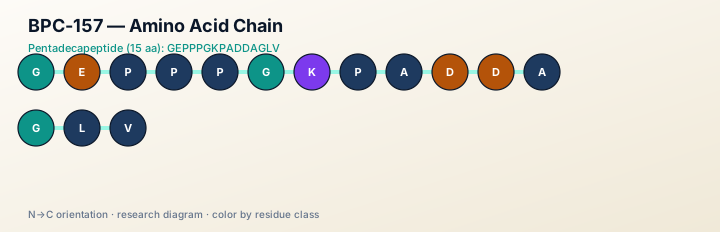
Scientific Overview
BPC-157 is a synthetic 15–amino-acid fragment derived from a protective protein sequence found in human gastric juice. In laboratory models it is studied for effects on soft-tissue repair pathways, angiogenesis, and gastrointestinal mucosal integrity.
Mechanism focus: Preclinical work suggests BPC-157 may influence nitric-oxide signaling, growth-factor pathways (including VEGFR2-related angiogenesis), and tendon/muscle fibroblast activity. Most mechanistic data remain preclinical.
Research Use Cases
- Tendon and ligament healing models (transection and crush injury designs)
- Skeletal-muscle repair and functional recovery studies
- Gastrointestinal ulcer and fistula healing models
- Vascular and angiogenesis pathway research
Use-Case Study Notations
- Case-study notation (preclinical): transected Achilles tendon models have reported faster collagen organization versus controls when BPC-157 was administered systemically or locally.
- Case-study notation (preclinical): muscle crush designs have associated BPC-157 with improved functional recovery markers and angiogenesis-related histology.
- Clinical translation remains limited; published human interventional evidence is sparse compared with animal literature.
Selected Studies (English, PubMed)
Five peer-reviewed sources indexed on PubMed. Links open the PubMed record for verification.
- Gastric pentadecapeptide body protection compound BPC 157 and its role in accelerating muscle healing — PubMed 30915550
- Stable Gastric Pentadecapeptide BPC 157 and Wound Healing — PubMed 34267654
- Emerging Use of BPC-157 in Orthopaedic Sports Medicine: A Systematic Review — PubMed 40756949
- BPC 157 and Standard Angiogenic Growth Factors. Gastrointestinal Tract Healing, Lessons from Tendon, Ligament, Muscle and Bone Healing — PubMed 29998800
- Multifunctionality and Possible Medical Application of the BPC 157 Peptide—Literature and Patent Review — PubMed 40005999
Related compounds
Research Use Only. This page is educational and intended for laboratory research context. Products are not for human consumption and are not intended to diagnose, treat, cure, or prevent any disease.