Metabolic
Retatrutide
Triple Agonist (GLP-1 / GIP / Glucagon)
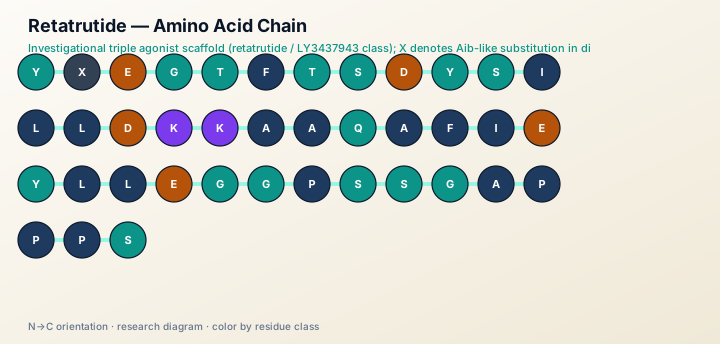
Scientific Overview
Retatrutide is an investigational triple hormone-receptor agonist (GLP-1, GIP, and glucagon receptors) evaluated in phase 2 obesity and metabolic liver-disease programs.
Mechanism focus: Combines incretin receptor agonism with glucagon-receptor activity hypothesized to increase energy expenditure while reducing caloric intake.
Research Use Cases
- Next-generation incretin/glucagon pharmacology
- Obesity phase-2 translational research context
- Metabolic dysfunction–associated steatotic liver disease (MASLD) studies
- Comparative multi-agonist receptor profiling
Use-Case Study Notations
- Case-study notation: a phase 2 NEJM trial reported dose-dependent weight reduction with retatrutide in adults with obesity.
- Case-study notation: subsequent analyses explore MASLD and related cardiometabolic comorbidities.
- Compound remains investigational; cite primary trial publications rather than marketing claims.
Selected Studies (English, PubMed)
Five peer-reviewed sources indexed on PubMed. Links open the PubMed record for verification.
- Triple-Hormone-Receptor Agonist Retatrutide for Obesity — A Phase 2 Trial — PubMed 37366315
- Triple hormone receptor agonist retatrutide for metabolic dysfunction-associated steatotic liver disease — PubMed 38858523
- Retatrutide—A Game Changer in Obesity Pharmacotherapy — PubMed 40563436
- Retatrutide for the treatment of obesity, obstructive sleep apnea and knee osteoarthritis — PubMed 41090431
- The promise of glucagon-like peptide 1 receptor agonists (GLP-1RA) for the treatment of obesity — PubMed 40022548
Related compounds
Research Use Only. This page is educational and intended for laboratory research context. Products are not for human consumption and are not intended to diagnose, treat, cure, or prevent any disease.