Metabolic
Semaglutide
GLP-1 Receptor Agonist
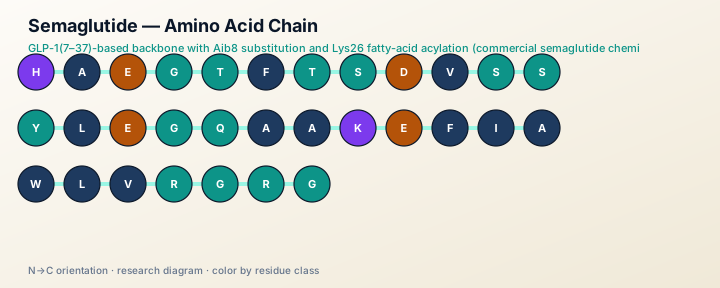
Scientific Overview
Semaglutide is a long-acting GLP-1 receptor agonist extensively studied in metabolic disease for glycemic control, body-weight reduction, and cardiovascular outcomes.
Mechanism focus: Activates GLP-1 receptors to enhance glucose-dependent insulin secretion, suppress glucagon, slow gastric emptying, and reduce appetite via central and peripheral pathways.
Research Use Cases
- Type 2 diabetes metabolic pathway research
- Obesity and energy-balance model systems
- Cardiovascular outcome biology (STEP/SELECT/SUSTAIN programs)
- Incretin receptor pharmacology comparisons
Use-Case Study Notations
- Case-study notation (clinical program): STEP trials reported substantial mean weight reduction with once-weekly semaglutide 2.4 mg versus placebo in adults with overweight/obesity.
- Case-study notation (clinical program): SUSTAIN-6 and SELECT evaluated cardiovascular outcomes in diabetes and obesity populations, respectively.
- Research materials should be handled as RUO and not represented as dispensed drug product.
Selected Studies (English, PubMed)
Five peer-reviewed sources indexed on PubMed. Links open the PubMed record for verification.
- Once-Weekly Semaglutide in Adults with Overweight or Obesity — PubMed 33567185
- Effect of Continued Weekly Subcutaneous Semaglutide vs Placebo on Weight Loss Maintenance — PubMed 33755728
- Two-year effects of semaglutide in adults with overweight or obesity: the STEP 5 trial — PubMed 36216945
- Semaglutide and Cardiovascular Outcomes in Patients with Type 2 Diabetes — PubMed 27633186
- Semaglutide and Cardiovascular Outcomes in Obesity without Diabetes — PubMed 37952131
Related compounds
Research Use Only. This page is educational and intended for laboratory research context. Products are not for human consumption and are not intended to diagnose, treat, cure, or prevent any disease.