Immune
Glutathione
Endogenous Tripeptide
Scientific Overview
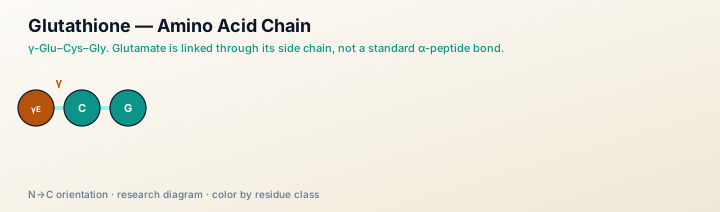
Glutathione is a tripeptide of glutamate, cysteine, and glycine found in most cells. Research literature covers its synthesis, its role in cellular redox balance, and its use as a substrate for thiol-dependent enzymes.
Mechanism focus: Synthesis is controlled largely through glutamate-cysteine ligase and glutathione synthetase. The tripeptide participates in thiol-disulfide exchange and is a cofactor for glutathione peroxidases and transferases.
Research Use Cases
- Cellular redox assays
- Glutathione synthesis pathway research
- Thiol-dependent enzyme studies
- Measurement of reduced and oxidized glutathione
Use-Case Study Notations
- Case-study notation: biosynthesis reviews describe the two-step synthesis of the tripeptide and its regulation.
- Case-study notation: metabolism reviews place glutathione in cellular redox systems rather than in a single pathway.
- This page is a research overview of the molecule. It does not present clinical outcome claims.
Selected Studies (English, PubMed)
Five peer-reviewed sources indexed on PubMed. Links open the PubMed record for verification.
- Glutathione: overview of its protective roles, measurement, and biosynthesis — PubMed 18796312
- Glutathione synthesis — PubMed 22995213
- Glutathione metabolism and its implications for health — PubMed 14988435
- Glutathione metabolism and its selective modification — PubMed 3053703
- The importance of glutathione in human disease — PubMed 12818476
Related compounds
Research Use Only. This page is educational and intended for laboratory research context. Products are not for human consumption and are not intended to diagnose, treat, cure, or prevent any disease.