Immune
KPV
α-MSH C-Terminal Tripeptide
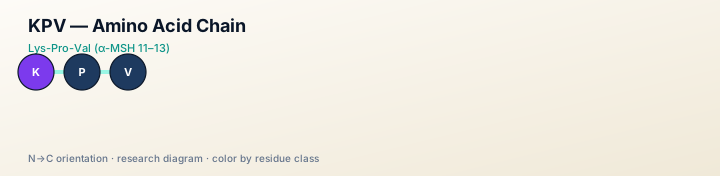
Scientific Overview
KPV is the C-terminal tripeptide of α-melanocyte–stimulating hormone, studied for anti-inflammatory and barrier-protective effects, including PepT1-mediated intestinal uptake.
Mechanism focus: Melanocortin-related anti-inflammatory signaling with evidence for reduced NF-κB–linked cytokine programs; intestinal transport via PepT1 is a distinctive research feature.
Research Use Cases
- Intestinal inflammation and colitis models
- Cutaneous inflammation / wound immunomodulation
- Melanocortin peptide structure–activity studies
- Peptide transporter (PepT1) research
Use-Case Study Notations
- Case-study notation: PepT1-mediated KPV uptake was linked to reduced intestinal inflammation in experimental models.
- Case-study notation: classic α-MSH fragment work dissected anti-inflammatory contributions of the KPV motif.
- Tripeptide identity testing is straightforward by MS but formulation stability still matters.
Selected Studies (English, PubMed)
Five peer-reviewed sources indexed on PubMed. Links open the PubMed record for verification.
- Dissection of the anti-inflammatory effect of the core and C-terminal (KPV) alpha-melanocyte-stimulating hormone peptides — PubMed 12750433
- PepT1-mediated tripeptide KPV uptake reduces intestinal inflammation — PubMed 18061177
- alpha-Melanocyte-stimulating hormone, MSH 11-13 KPV and adrenocorticotropic hormone signalling — PubMed 15102092
- alpha-MSH related peptides: a new class of anti-inflammatory and immunomodulating drugs — PubMed 17934097
- Are melanocortin peptides future therapeutics for cutaneous wound healing? — PubMed 30661264
Related compounds
Research Use Only. This page is educational and intended for laboratory research context. Products are not for human consumption and are not intended to diagnose, treat, cure, or prevent any disease.