Metabolic
AOD-9604
hGH Fragment 176–191 Analog
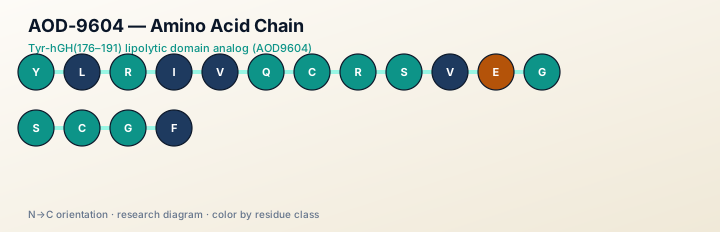
Scientific Overview
AOD-9604 is a synthetic peptide corresponding to the C-terminal lipolytic domain of human growth hormone (fragment 176–191), studied for fat-metabolism effects without classical GH growth activity.
Mechanism focus: Investigated for β3-adrenergic–related lipolytic signaling and adipose metabolic regulation distinct from full-length GH IGF-1 growth pathways.
Research Use Cases
- Adipose lipid-metabolism assays
- Obesity pharmacology screening
- Cartilage/OA intra-articular exploratory models
- Anti-doping detection method development
Use-Case Study Notations
- Case-study notation: early metabolic studies in obese mouse models evaluated lipid metabolism after chronic AOD9604 exposure.
- Case-study notation: rabbit osteoarthritis work explored intra-articular AOD9604 ± hyaluronic acid.
- Human efficacy evidence is more limited than for GLP-1 class agents; emphasize preclinical framing.
Selected Studies (English, PubMed)
Five peer-reviewed sources indexed on PubMed. Links open the PubMed record for verification.
- The effects of human GH and its lipolytic fragment (AOD9604) on lipid metabolism following chronic treatment in obese mice — PubMed 11713213
- Metabolic studies of a synthetic lipolytic domain (AOD9604) of human growth hormone — PubMed 11146367
- Detection and in vitro metabolism of AOD9604 — PubMed 25208511
- Effect of Intra-articular Injection of AOD9604 with or without Hyaluronic Acid in Rabbit Osteoarthritis — PubMed 26275694
- Obesity drugs in clinical development — PubMed 16625817
Related compounds
Research Use Only. This page is educational and intended for laboratory research context. Products are not for human consumption and are not intended to diagnose, treat, cure, or prevent any disease.