Metabolic
5-Amino-1MQ
NNMT Inhibitor
Scientific Overview
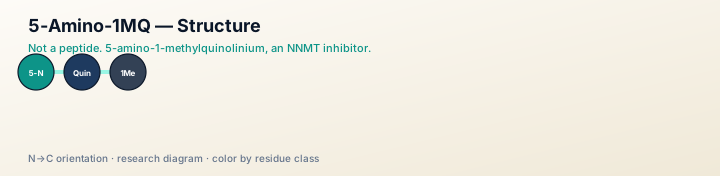
5-Amino-1MQ is a quinolinium small molecule studied as an inhibitor of nicotinamide N-methyltransferase (NNMT). It is not a peptide. Laboratory work examines how blocking NNMT changes nicotinamide methylation and related metabolic readouts in cell and animal models.
Mechanism focus: NNMT methylates nicotinamide and consumes cellular methyl donor. Inhibitor studies, including work that names 5-amino-1-methylquinolinium, follow that enzyme in adipose and other metabolic models. Findings stay preclinical relative to a settled human mechanism.
Research Use Cases
- NNMT enzyme inhibition assays
- Nicotinamide methylation and NAD-related pathway research
- Adipocyte and whole-animal metabolic models
- Analytical methods for the quinolinium inhibitor
Use-Case Study Notations
- Case-study notation (preclinical): papers that name 5-amino-1-methylquinolinium examine NNMT inhibition in metabolic models.
- Case-study notation (analytical): a plasma assay paper describes pharmacokinetic measurement of this quinolinium compound in rats.
- This catalog page does not present clinical outcome claims. Human interventional evidence specific to this molecule remains limited.
Selected Studies (English, PubMed)
Five peer-reviewed sources indexed on PubMed. Links open the PubMed record for verification.
- Development & validation of LC-MS/MS assay for 5-amino-1-methyl quinolinium in rat plasma: Application to pharmacokinetic and oral bioavailability studies — PubMed 34304009
- Nicotinamide N-methyltransferase inhibition mitigates obesity-related metabolic dysfunction — PubMed 39161060
- Reduced calorie diet combined with NNMT inhibition establishes a distinct microbiome in DIO mice — PubMed 35013352
- Selective and membrane-permeable small molecule inhibitors of nicotinamide N-methyltransferase reverse high fat diet-induced obesity in mice — PubMed 29155147
- Structure-Activity Relationship for Small Molecule Inhibitors of Nicotinamide N-Methyltransferase — PubMed 28548833
Related compounds
Research Use Only. This page is educational and intended for laboratory research context. Products are not for human consumption and are not intended to diagnose, treat, cure, or prevent any disease.