Hormonal
Tesamorelin
Stabilized GHRH(1–44) Analog
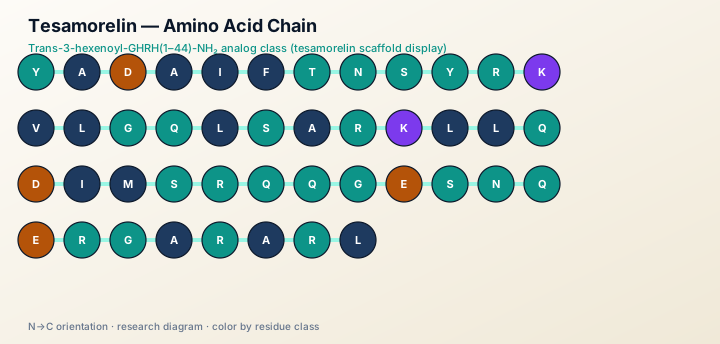
Scientific Overview
Tesamorelin is a stabilized GHRH analog studied and used clinically for reduction of excess visceral adipose tissue in HIV-associated lipodystrophy, with additional metabolic and hepatic-fat research.
Mechanism focus: Pulsatile GH release via GHRH receptor activation; visceral fat and liver-fat endpoints have been primary clinical research readouts.
Research Use Cases
- Visceral adiposity and body-composition research
- HIV lipodystrophy metabolic models
- Liver-fat / NAFLD-adjacent imaging endpoints
- GH axis therapeutics pharmacology
Use-Case Study Notations
- Case-study notation: randomized studies reported reductions in visceral and liver fat in HIV patients with abdominal fat accumulation.
- Case-study notation: newer work examines tesamorelin with modern antiretroviral regimens and neurocognitive outcomes.
- Present research-grade material separately from approved branded drug product.
Selected Studies (English, PubMed)
Five peer-reviewed sources indexed on PubMed. Links open the PubMed record for verification.
- Effect of tesamorelin on visceral fat and liver fat in HIV-infected patients with abdominal fat accumulation — PubMed 25038357
- Tesamorelin: a growth hormone-releasing factor analogue for HIV-associated lipodystrophy — PubMed 22298602
- Tesamorelin, a human growth hormone releasing factor analogue — PubMed 19243281
- Efficacy and safety of tesamorelin in people with HIV on integrase inhibitors — PubMed 38905488
- Effects of Tesamorelin on Neurocognitive Impairment in Persons With HIV and Abdominal Obesity — PubMed 39813152
Related compounds
Research Use Only. This page is educational and intended for laboratory research context. Products are not for human consumption and are not intended to diagnose, treat, cure, or prevent any disease.