Cognitive
Semax
ACTH(4–10) Heptapeptide Analog
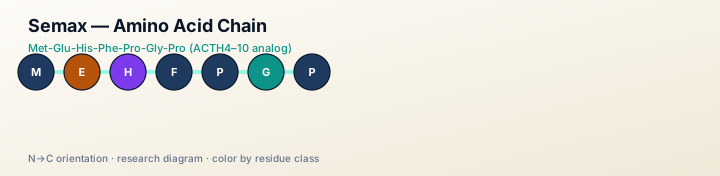
Scientific Overview
Semax is a synthetic ACTH(4–10) analog studied primarily in neurobiology for effects on cognition-related pathways, neurotrophin expression, and neuroprotection models.
Mechanism focus: Reported to modulate BDNF/trkB transcription and monoaminergic systems in rodent CNS models; copper-binding properties have also been characterized.
Research Use Cases
- Neurotrophin gene-expression studies
- Cognitive and behavioral neuroscience models
- Ischemia/neuroprotection experimental systems
- Peptide–metal (copper) interaction chemistry
Use-Case Study Notations
- Case-study notation: hippocampal BDNF/trkB upregulation has been reported after Semax administration in rodent designs.
- Case-study notation: ischemia models have linked Semax/related glyprolines to neurotrophin pathway activation.
- Most Semax literature is preclinical or regional clinical research; interpret external validity cautiously.
Selected Studies (English, PubMed)
Five peer-reviewed sources indexed on PubMed. Links open the PubMed record for verification.
- Semax, an analog of ACTH(4-10) with cognitive effects, regulates BDNF and trkB expression in the rat hippocampus — PubMed 16996037
- Semax, synthetic ACTH(4-10) analogue, attenuates behavioural and neurochemical alterations — PubMed 33418449
- Semax, a Synthetic Regulatory Peptide, Affects Copper-Induced Abeta Aggregation and Amyloid Formation — PubMed 35080861
- Influence of the N-terminus acetylation of Semax, a synthetic analog of ACTH(4-10), on copper(II) binding — PubMed 27586814
- Semax and Pro-Gly-Pro activate the transcription of neurotrophins and their receptor genes after cerebral ischaemia — PubMed 19633950
Related compounds
Research Use Only. This page is educational and intended for laboratory research context. Products are not for human consumption and are not intended to diagnose, treat, cure, or prevent any disease.