Hormonal
Melanotan II
Melanocortin Receptor Agonist
Scientific Overview
Melanotan II is a synthetic cyclic peptide that binds melanocortin receptors in pharmacological research. This page covers receptor and laboratory signaling literature.
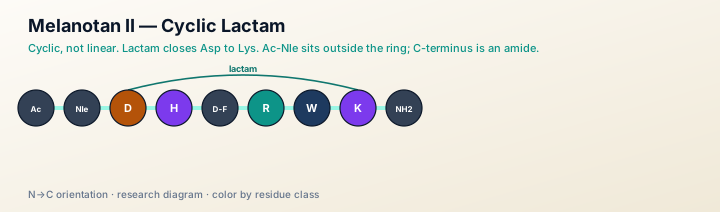
Mechanism focus: The cyclic lactam is studied for melanocortin-receptor affinity, including MC4R-related pathways. Published animal work examines central melanocortin signaling, feeding behavior, and thermogenic models.
Research Use Cases
- Melanocortin receptor binding assays
- MC4R signaling models
- Central neuropeptide pharmacology
- Chemical comparison with related cyclic peptides
Use-Case Study Notations
- Case-study notation (preclinical): melanotan II has been used as a melanocortin agonist in feeding and thermogenesis models.
- Case-study notation: chemistry papers describe staple and scaffold work that uses the melanotan II sequence as a substrate.
- This page does not describe cosmetic outcomes. Receptor binding is not an appearance claim.
Selected Studies (English, PubMed)
Five peer-reviewed sources indexed on PubMed. Links open the PubMed record for verification.
- Melanocortin receptor agonist melanotan-II microinjected in the nucleus accumbens decreases appetitive and consumptive responding for food — PubMed 36155088
- Melanotan II, a melanocortin agonist, partially rescues the impaired thermogenic capacity of pituitary adenylate cyclase-activating polypeptide deficient mice — PubMed 33332767
- Effect of Melanotan-II on Brain Fos Immunoreactivity and Oxytocin Neuronal Activity and Secretion in Rats — PubMed 28009464
- Evidence that Melanocortin Receptor Agonist Melanotan-II Synergistically Augments the Ability of Naltrexone to Blunt Binge-Like Ethanol Intake in Male C57BL/6J Mice — PubMed 26108334
- 5-Hydroxypyrroloindoline Affords Tryptathionine and 2,2'-bis-Indole Peptide Staples: Application to Melanotan-II — PubMed 38285527
Related compounds
Research Use Only. This page is educational and intended for laboratory research context. Products are not for human consumption and are not intended to diagnose, treat, cure, or prevent any disease.