Stacks
KLOW Stack
KPV + BPC-157 + TB-500 + GHK-Cu
Scientific Overview
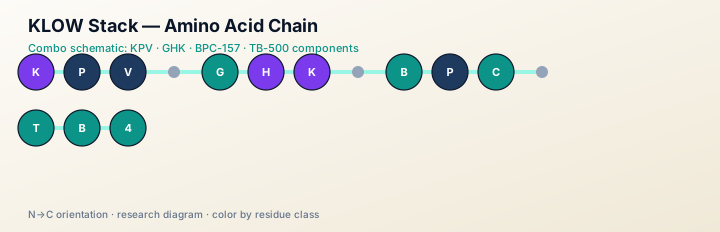
KLOW is a four-component research stack combining anti-inflammatory KPV signaling with BPC-157, Tβ4-fragment, and GHK-Cu pathways for multi-axis inflammation and repair studies.
Mechanism focus: Intended experimental rationale: melanocortin-fragment inflammation control + tissue-repair peptides + copper-tripeptide matrix remodeling.
Research Use Cases
- Multi-pathway inflammation/repair screens
- Gut–skin axis exploratory designs
- Component contribution knockout-style comparisons
- Complex kit analytical method development
Use-Case Study Notations
- Case-study notation: KPV intestinal-inflammation uptake studies motivate the immune/gut arm.
- Case-study notation: remaining endpoints rely on component BPC-157, Tβ4, and GHK literature.
- Clearly label each vial/peptide in multi-component kits for research traceability.
Selected Studies (English, PubMed)
Five peer-reviewed sources indexed on PubMed. Links open the PubMed record for verification.
- PepT1-mediated tripeptide KPV uptake reduces intestinal inflammation — PubMed 18061177
- Dissection of the anti-inflammatory effect of the core and C-terminal (KPV) alpha-melanocyte-stimulating hormone peptides — PubMed 12750433
- Stable Gastric Pentadecapeptide BPC 157 and Wound Healing — PubMed 34267654
- The human tri-peptide GHK and tissue remodeling — PubMed 18644225
- Thymosin β4: a multi-functional regenerative peptide. Basic properties and clinical applications — PubMed 22074294
Related compounds
Research Use Only. This page is educational and intended for laboratory research context. Products are not for human consumption and are not intended to diagnose, treat, cure, or prevent any disease.